

Eye Doctor Amesbury MA
Foley Vision Center has served as a dedicated, caring provider of quality vision services and products. We want to be your Amesbury MA eye doctor.
As a patient, you can expect attentive care from our experienced optometrist and staff. Leveraging advanced diagnostic technology, our services include eye exams, vision correction, medical eye care, specialty eyeglasses and sunglasses, specialty contact lenses, and more. For your convenience, we also proudly accept many insurance plans.
Foley Vision Center
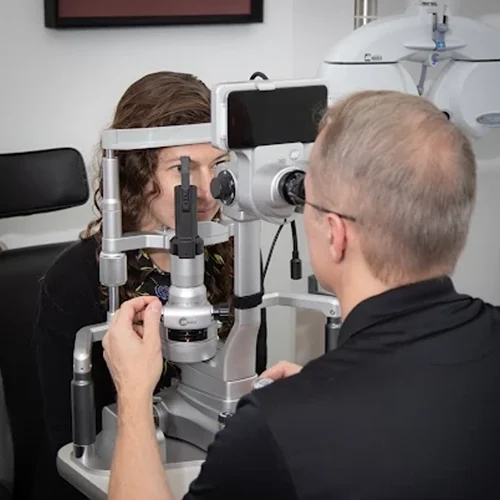
Foley Vision Center is fully digital, utilizing cutting-edge technology to enhance patient care. Our office is committed to staying at the forefront of advancements in diagnostics and treatments, ensuring the best possible outcomes. By incorporating high-tech tools, Dr. Foley provides patients with clear, visual insights into their health, empowering them to make informed decisions about their treatment plans.
To compliment our comprehensive eye care services, our optical department features a varied selection of eyeglass lenses and frames from top brands. With guidance from our knowledgeable staff, you’ll find the look you want and the features you need.
Give yourself the gift of clear vision–schedule an appointment at Foley Vision Center today.

Matthew Foley, O.D.
Our Advanced Services
You deserve an eye care team you can rely on and clear vision that lets you see the world with confidence. From routine eye exams to prescription glasses to advanced contact lens fittings, we provide comprehensive eye care services. This means we focus on the details, identify the root causes of vision concerns, and deliver personalized, lasting solutions.
- Comprehensive Eye Exams (Adults & Kids)
- Dry Eye Treatments: IPL, RF, LLLT, Punctal Plugs, Amniotic Membranes
- Iris Photography & Custom Prints
- AI-Enhanced Vision Care & Refraction
- Myopia Management Lenses for Children (Stellest, MiSight)
- Meta AI Smart Glasses
- Emergency Eye Care
- OCT Imaging
- Widefield Retinal Imaging
- Electroretinography (ERG)
- Visual Field Testing
- Autorefraction & Keratometry
- Digital Refraction
- Color Vision Diagnostics (Rabin cone for FAA pilot testing)
- VR Pupil & Eye Movement Evaluations
- Contact Lens Fittings & Specialty Lenses
- Eyeglasses, Frames & On-Site Lensmeter Readings
- NuLids Pro treatment for blepharitis / demodex mites

Eye Exam

Contact Lens Exam

Lenses & Frames

Contact Lenses
The History of Eye Care
The history of eye care dates back thousands of years, with ancient civilizations making significant contributions to our understanding of vision and eye health. In ancient Egypt, around 1550 BC, the Ebers Papyrus documented various treatments for eye diseases, highlighting the early recognition of the importance of eye care. The Greeks and Romans also made notable advancements, with renowned figures like Hippocrates and Galen studying and writing about ocular anatomy and conditions. Their work laid the foundation for future medical practices and the development of specialized eye care.
During the Middle Ages, Islamic scholars such as Alhazen (Ibn al-Haytham) made groundbreaking strides in optics and vision science. Alhazen's Book of Optics, written in the 11th century, challenged earlier Greek theories of vision and introduced new concepts about how light and the eye interact. The Renaissance period saw further advancements, particularly with the invention of spectacles in the late 13th century, which revolutionized the way people corrected their vision. These historical milestones collectively contributed to the evolution of modern ophthalmology and optometry, leading to the sophisticated eye care practices we benefit from today.
What Kind of Training Does an Optometrist Have?
Optometrists undergo extensive training to become experts in eye health and vision care. Their education begins with a bachelor's degree, typically in a science-related field, followed by enrollment in a four-year optometry program at an accredited optometry school. During these four years, optometry students study various subjects, including optics, visual science, anatomy, physiology, and pathology of the eye. They also receive hands-on clinical training, where they learn to diagnose and manage a wide range of eye conditions, prescribe corrective lenses, and provide vision therapy.
In addition to their formal education, optometrists must pass a series of rigorous exams to obtain their license to practice. This includes the National Board of Examiners in Optometry (NBEO) exams, which test their knowledge and clinical skills. Some optometrists choose to further specialize in areas such as pediatric optometry, geriatric optometry, or ocular disease through residency programs, which provide an additional one to two years of focused training. Continuous education is a crucial part of their career, as they must stay updated with the latest advancements in eye care and treatment techniques to provide the best possible care for their patients.